

Looking at Earthworks Artists & Their Descendants

Today I look at how various artists over recent times have reacted against the idea that developed through the history of art of the gallery as a sacred place, and the art within as items to be worshipped.
A recent installation in New York by Urs Fisher takes place inside a gallery, while some of his antecedents had moved their work outside the gallery.
Urs Fischer has reduced Gavin Brown’s Enterprise to a hole in the ground, and it is one of the most splendid things to have happened in a New York gallery in a while…A 38-foot-by-30-foot crater, eight feet deep, extends almost to the walls of the gallery, surrounded by a fourteen-inch ledge of concrete floor. A sign at the door cautions…intrepid viewers can, all the same, inch their way around the hole.
It is the gallery deconstructed and “makes you look at galleries in a new way.” Read more about it in this New York magazine article.

Gordon Matta-Clark deconstructed whole buildings. “It’s all about evolution,” he said.
Disappearing Act, Revisiting Gordon Matta-Clark’s Lost Public Art…
from Karen Rosenberg:
“…in the early seventies, Gordon Matta-Clark made transformative, transgressive art out of New York’s desolate corners. Without permits or any official support, the former Cornell architecture student hacked into the walls and floors of derelict buildings (of which there were many), turning shadowy wrecks into light-filled sculptures. “I don’t like the way most art needs to be looked at in galleries,” Matta-Clark once said, “any more than the way empty halls make people look.”
Read more of this review of Matta-Clark’s recent retrospective, or read this interesting personal story about Gordon Matta-Clark by Ned Smyth.

History is representational, while time is abstract; both of these artifices may be found in museums, where they span everybody’s own vacancy. The museum undermines one’s confidence in sense data and erodes the impression of textures upon which our sensations exist…Visiting a museum is a matter of going from void to void. Hallways lead the viewer to things once called ‘pictures’ and ‘statues’.
Excerpt from “Some Void Thoughts On Museums” by Robert Smithson. See and read more about Robert Smithson’s Spiral Jetty at his website, which has fabulous photos of this and other earthworks, and links to his mirror works, drawings, other writings, and more.
Take a look at “The Broken Kilometer” by Walter De Maria, of Lightning Field fame. (all photos of this work are claimed by the Dia Art Foundation, so I cannot show it to you here).
Five hundred gleaming gold-coloured rods, receding into the distance, laid out majestically in a five-sectioned plane…And all De Maria had been wanting to do was create something enduring and especially beautiful to anchor in some small way the viewer’s perceptions, in an attempt to counter the trend of that time…
To this day this supremely gleaming work is still where it ever was in New York. The whole room seems to be filled with a simple splendour…Even Barnett Newman’s “zip” paintings, Dan Flavin’s fluorescent tube installations or Henri Matisse’s captivating chapel in Vence are not likely to fill the viewer with such wonder…De Maria’s installation has caused the art world to divide just as the Red Sea once did, allowing those with eyes to see to make out a light at the end of the tunnel.

“City” and “Double Negative” by Michael Heizer – earthworks in the Nevada desert.
The sheer size of Double Negative also invites contemplation of the scale of art, and the relation of the viewer the earth and to art itself. How does art change when it can’t fit in a museum? How does one observe an artwork that’s a quarter-mile long?
See and read more about Michael Heizer’s earthworks at the website Double Negative.

Chris Burden has been called ‘one of America’s few really scary artists.’ He is the artist whose early works involved placing himself in personal danger, such as when in 1971, he had himself shot in the arm by a friend. Another time, he himself shot at a 747: Chris Burden shooting at a 747, 1973. Read some recent information on him here.
Which brings me to “A Matter of Time” — an essay from the Tate, spring 2007:
The ability to play with time, stretching and quickening it, is a distinctively modern phenomenon, since the advent of photography in the twentieth century, and the idea of mathematical time introduced with the emergence of secular humanism after the Enlightenment.
Are Your Objects Objects or Facsimiles?
Class notes from Poetic Non-Representational Acrylic Painting with Andrew Long, Fall 2007
The object in the painting – is it being an object vs. being a facsimile of the object? Does it have a history, a great hook, and richness, a fullness, or is it empty?
What’s the difference between this abstract piece of art and wallpaper?
Matthew Ritchie — “You mostly wait around for things to leak.” -MR, from this Boston Globe article.
Check out Guerra Paints in NY or Nova Paints in CA for a large bottle of pre-mixed binder & highly concentrated paints to mix.
To increase interest, drama, contrast, come in with a pure black, white or deeper shade of color to really pop things up in high relief. Try india ink.
Mediums – retarder will make paint work more like oils. Acrylic flow release will break apart the paint. Use GAC100 + water (50-50) to use atomizer.
Use a belt sander with 30-50 grit sandpaper to carve down into the history of your paint. Try a Dremel tool.
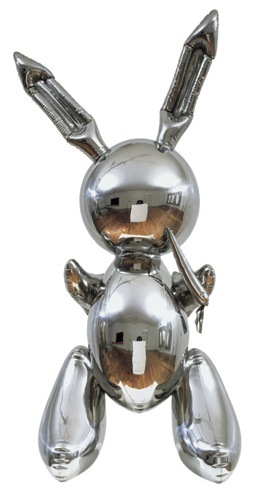
Jeff Koons has 80 assistants!

See and read more about the work of Mia Pearlman.
Why Do You Create the Art You Create?

Painting by Terry Winters, just because it’s so frigging beautiful!
Notes in response to the question “Why Do You Create the Art You Create?” posed in the class Poetic Non-Representational Acrylic Painting with Andrew long, Fall 2007
Thoughts and Quotes in response (from several previous classes at SAIC posted earlier in this blog):
An artist needs to be able to sustain their penetration to move past a simply available solution to one with greater depth.
The image must convey something special which appeals to the senses through the way it is presented.
Abstract concepts help to convey visual meaning.
The essence of a work lies in its visual meaning.
Aim for the BIG LOOK:
- tough
- brutal
- uncompromising articulation of imagery and idea
- extremes of technique
————————————————————————————————-
Thoughts and notes in response (from a discussion with my husband):
Meaning is a property of symbols – process is a mapping between symbol and what it’s assigned to represent — an experience of a thing or a concept that the reader has to have had.
Shape – how do we identify a shape? Similar to the process of mapping a symbol. (think of shapes in a cloud that make recognizable shapes).
“Something for everybody.”
Shapes relate to the notion of structure – an organizing principle or structures – little shapes that make up the whole structure.
Our notion of meaning and structure – parts relate functionally to the whole.
Some writers invoke “how true, how true.” Others invoke “I see, I see.” Better to be the kind who invokes “I see, I see.”
Color is more akin to music – it’s not about experience, it is experience.
Music – listeners’ enjoyment has to do with a balance between the expected (or familiar) and the unexpected – maybe 50-50.
Country music is boring because it’s all expected — jazz is uncomfortable because there’s not enough that’s expected.
Country music is to jazz as [Thomas Kincaide] is to abstract art?
Am I saying something?
Argument:
- hypothesis
- data
- interpretation of data (mapping of meaning)
The development is a key aspect of it.
Step – “it follows…”
Early phases – R&D – trial and error.
Then exploring; then becomes more directed as you develop & discover how to discover.
Like the Vikings vs. the navigators (Columbus, etc.) — the Vikings may have discovered America first, but they were only about going out and bumping into things; the navigators knew there was stuff out there to discover, set out to discover them, and developed the techniques to discover (navigation, etc). They discovered how to discover.
So the ‘let’s go find it’ phase can only come after the ‘bumping into’ phase.
Ontology – stuff from the outside world.
Just Make Work!

Class notes from Poetic Non-Representational Acrylic Painting with Andrew Long, Fall 2007
What do you think of when you think of a building? Do you think of the structure underneath? Why don’t they call it a “built”? “Building” is a verb – a process.
Maxine Price – a fellow student’s favorite artist, for layers and colors.
Just make work! Andrew made over 150 pcs. his first year; he’s now been painting 7 years.
Joan Snyder – who won a Brooklyn Museum exhibit.
Techniques:
- Clear tar – makes acrylics work more like oil.
- Get an ice chopper and cake spatula from restaurant supply store.
Jackhammer Your Myths

Class notes from Reinventing Your Creative Process with Andrew Long, Fall 2007
Jackhammer your myths.
For me, consolidate my careers. Think about validation. Making money doesn’t validate your art (yes, but it makes it possible to spend more time doing your art).
Think about, art can be more fun w/o the business end of it.
Think about expectations.
Excuses …back up to find the real cause of an excuse. Such as, you’re late because…?
- traffic on Mopac.
- No. Because you didn’t leave on time.
- Because you didn’t ask your boss to leave early.
- Because you hate your job…
- So why are you there?
Throw ‘good’ out the window. It’s all good.
Hole in my bucket where the juice runs out…
Artspoken 12×12 Opening

Wow! It was packed! We arrived almost at 6 on the dot, and the small gallery was already extremely crowded! It stayed that way the entire time, too.
Several people I knew showed up, even though I hadn’t managed to get my second invitation sent out to everybody. Met a couple of the women who run the gallery, who were both so very nice to me. They hung
It’s a nice space, too. I’m not sure you could have fit one more painting on the walls, though. 🙂
Einstein on the Beach

Class notes from Reinventing Your Creative Process with Andrew Long, Fall 2007
“One theory of education says that learning is not accumulating information but discarding what your mind doesn’t need.”
A Compelling Unorthodox Originality in Venetian Art

Painting by Titian
“Assunta”
oil on linen
690 × 360 cm
1516-1518
On a BBC show on Venetian Art, it was said that Venetian art had a compelling unorthodox originality.
But until Titian, Venetians were accused of failure to elevate painting out of the material world to an expression of an idea.
Churn All Your Influences

Class notes from Reinventing Your Creative Process with Andrew Long, Fall 2007
Are you what you paint?
Are you painting something external or internal?
Check the library – any book can be sent to the local library from Austin, UT, or ACC’s libraries.
Go to see the Mike show at the Blanton.
Go to:
- Art Palace
- OK Mountain
- Studio 107
- Big Medium (Bolm)
- Lora Reynolds, off West & 3rd (father-in-law is Mickey Kline – 1 of top 10 collectors)
Go see work that you hate.
As a practicing artist today – you – now.
Churn all your influences & interests into the ground. What are you pruning and why?

N.Y. Magazine -read Jerry Saltz (critic) articles.
